
An updated version of my beginner-friendly gluten-free oat-flour challah. Psyllium husk powder replaces the xanthan gum, turning the loose batter into a soft, scoopable dough with better oven spring, a less crumbly slice, and a chewier crumb.
Recipe-developer note: The psyllium ratio in this draft was worked out from the dough's weights and has not been test-baked yet. Please do a trial run before publishing — see the recipe Notes for what to watch.
Gluten-Free Oat Challah (Psyllium Husk Version)
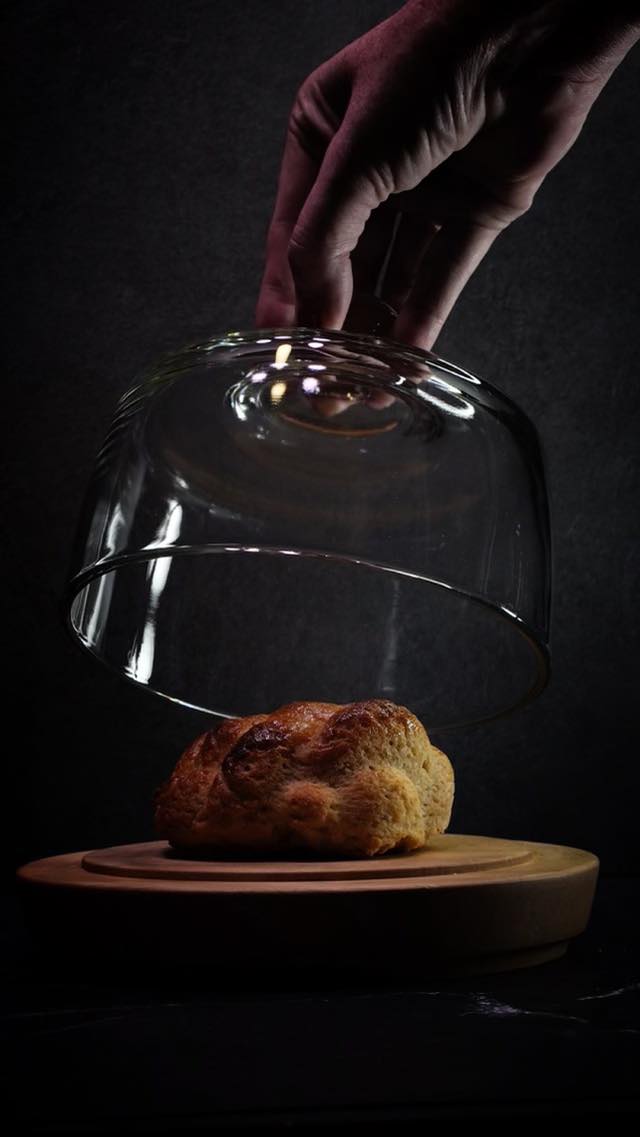
An updated version of my beginner-friendly gluten-free oat-flour challah. Psyllium husk powder replaces the xanthan gum, turning the loose batter into a soft, scoopable dough with better oven spring, a less crumbly slice, and a chewier crumb.
For the yeast proof
- 2¼ tsp active dry yeast 7 g (1 envelope)
- 1 tsp sugar 4 g
- ¼ cup warm water 60 ml, about 110°F
Psyllium gel
- 5 tsp psyllium husk powder 15 g — replaces the 2 tsp xanthan gum; see Notes if using whole husks
- 1½ cups lukewarm water 360 ml
Dry ingredients
- 2¼ cups GF oat flour 225 g
- ½ cup GF rice flour 80 g
- ¼ cup GF potato starch 40 g
- ¼ cup GF tapioca flour/starch 30 g
- 1½ tsp salt 9 g
Wet ingredients
- ¼ cup honey 85 g
- ¼ cup canola oil 60 ml
- ½ cup almond milk 120 ml
- 2 large eggs 100 g
For baking
- 1 egg yolk for glazing
- Proof the yeast. Dissolve the teaspoon of sugar in the 1/4 cup warm water. Add the yeast, mix well with a fork for about 15 seconds, and set aside until frothy, about 5 minutes.
- Gel the psyllium. Whisk the psyllium husk powder into the 1 1/2 cups lukewarm water and let it sit for about 10 minutes, until thick and gel-like.
- Combine the dry ingredients in a large bowl, whisking out any clumps.
- Combine the wet ingredients. Whisk the honey, oil, almond milk, and eggs into about two-thirds of the psyllium gel.
- Pour the wet mixture into the dry mixture slowly and mix to combine, then add the yeast mixture from step 1.
- Mix well for 3–5 minutes (by hand or with a stand mixer). The dough will be soft and scoopable — thicker than the original batter version, but it should not be stiff. If it seems stiff, beat in the remaining psyllium gel 1 tablespoon at a time.
- First rise. Preheat the oven to 200°F, then turn it OFF. Cover the dough bowl with parchment paper and leave it in the warm (but off!) oven for about 1 hour, or until doubled in size.
- Take the bowl out and turn the oven back on to 200°F. Stir the dough down and spoon it into lightly greased pans — small loaf pans work, but I use a challet pan; this recipe makes 4 challets. Turn the oven off.
- Second rise. Cover the pan(s), return to the warm (but off) oven, and let rise again for about 40 minutes, or until doubled.
- Remove the rising challah from the oven and preheat to 375°F.
- Bake part one: Bake uncovered at 375°F for 15 minutes. Line a cookie sheet with the parchment paper you used to cover the dough. Remove the pans from the oven and invert the half-baked loaves onto the cookie sheet — they should be solid at this point.
- Bake part two: Lightly glaze the loaves with the egg yolk and return to the oven. Bake uncovered at 375°F for 15–20 minutes more, until the tops are a nice golden brown and an instant-read thermometer registers 200–205°F in the center.
- Move to a wire rack to cool before slicing.
Psyllium husk powder takes the place of xanthan gum here — the two are both binders, and used together they can turn gummy, so don’t add xanthan back in. The 2 tsp of xanthan in the original converts to 5 tsp (15 g) psyllium at the ratio used across these adaptations (~2 tsp psyllium per 3/4 tsp xanthan).
Using whole psyllium husks? Use 2 Tbsp plus 1 tsp and grind to a fine powder first for the smoothest crumb.
To use instant yeast instead of active dry, whisk the same amount (2 1/4 tsp) into the dry ingredients and skip the proofing step — just add the 1/4 cup warm water to the wet mixture.
Grind-your-own oat flour note from the original still applies: grind certified GF oats to a fine flour and measure after grinding.
Because psyllium holds extra moisture, do not underbake — go by the internal temperature (200–205°F), not just color, or the centers will eat gummy.
Trial-run checklist (not yet test-baked): confirm the gelled psyllium doesn’t make the dough too loose to hold its shape in the pans (hold back some gel if it does — the original batter was “a little runny,” so some slack is expected); confirm the second rise doubles without collapsing; confirm centers hit 200–205°F without over-browning (tent with foil if needed).
Using whole psyllium husks? Use 2 Tbsp plus 1 tsp and grind to a fine powder first for the smoothest crumb.
To use instant yeast instead of active dry, whisk the same amount (2 1/4 tsp) into the dry ingredients and skip the proofing step — just add the 1/4 cup warm water to the wet mixture.
Grind-your-own oat flour note from the original still applies: grind certified GF oats to a fine flour and measure after grinding.
Because psyllium holds extra moisture, do not underbake — go by the internal temperature (200–205°F), not just color, or the centers will eat gummy.
Trial-run checklist (not yet test-baked): confirm the gelled psyllium doesn’t make the dough too loose to hold its shape in the pans (hold back some gel if it does — the original batter was “a little runny,” so some slack is expected); confirm the second rise doubles without collapsing; confirm centers hit 200–205°F without over-browning (tent with foil if needed).
