
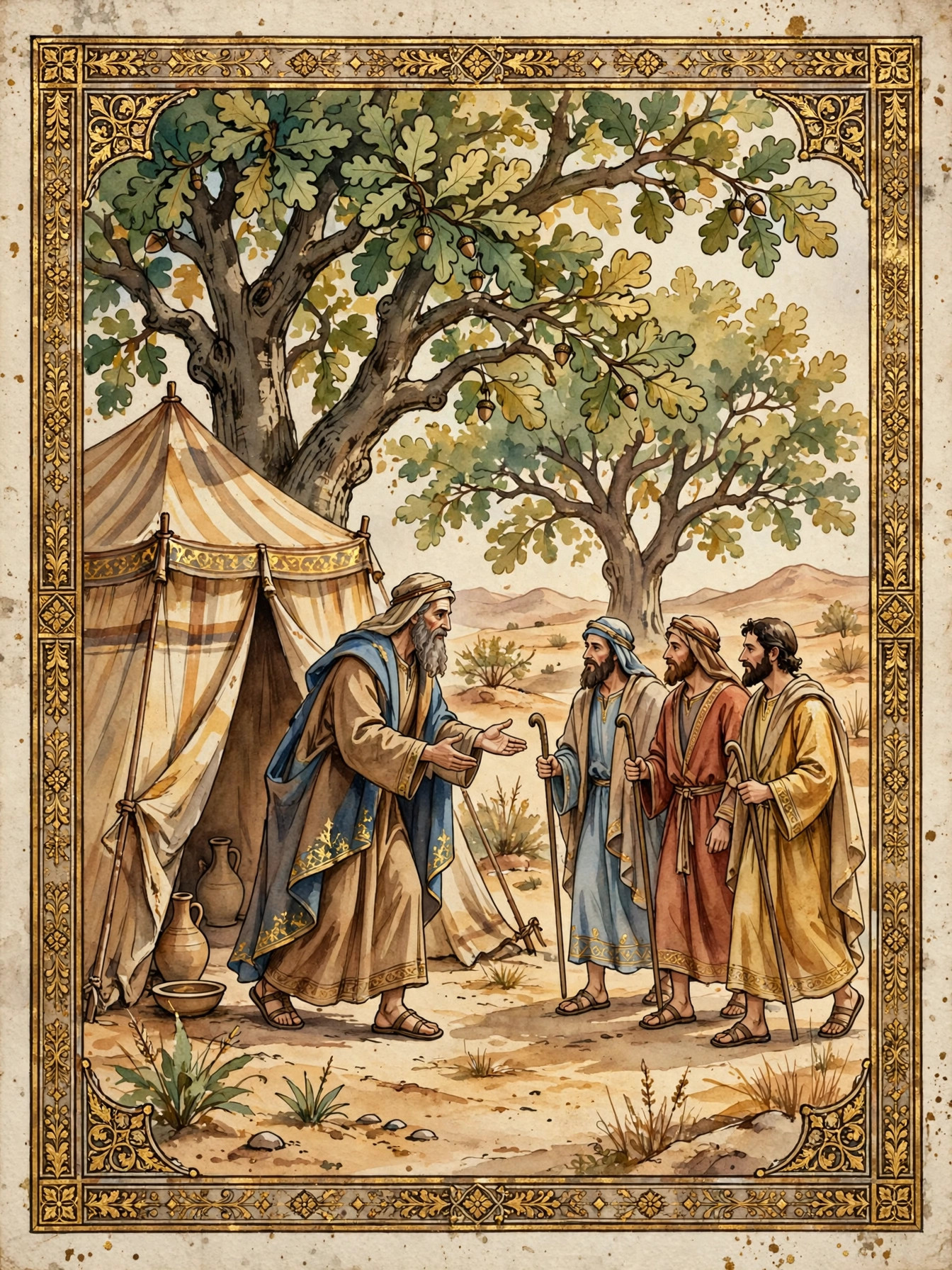
וַיֵּרָא — “Radical Welcome”
Genesis 18:1–22:24 · Shabbat, October 31, 2026 · Haftarah: II Kings 4:1–37
Read on Shabbat, 20 Cheshvan 5787 · October 31, 2026
Vayera sets radical welcome against violent inhospitality: Abraham’s open tent, Sodom’s besieged gate, a cast-out son heard in the wilderness, a laugh that would not stay hidden, and a knife an angel stays.
Key Texts
Genesis 18:1
God appears at Mamre; Abraham runs to three strangers and serves a feast; tradition pictures his tent open on all four sides.
Ezekiel 16:49
The prophet names Sodom’s sin as arrogance, plenty, and abandoning the poor. Amy Soule (Keshet, 2010) pairs Genesis 19:5 with Judges 19: in both, a mob demands a male guest and women are offered instead — the sin is rape and the broken guest-code, not orientation.
Genesis 19:9
The mob turns on Lot, a foreigner who dared welcome outsiders; welcoming the stranger is the city’s real taboo.
Genesis 21:17
Expelled to the wilderness, Hagar weeps, and God hears the boy where he is and opens her eyes to a well; blessing is not zero-sum.
Genesis 22:2
The Akedah: an angel stays the knife and a ram is offered instead; the guide flags honestly that the Akedah has almost no established queer commentary yet.
Discussion Questions
Eight prompts for paired study, full-group conversation, or personal reflection.
- The famous story and the forgotten one — Which story in Vayera do people know best, and which have you never really heard? What changes when the forgotten story gets equal time?
- Reclaiming a text — Can a text long used against queer people be reclaimed? What does honest re-reading require, and where are its limits?
- Tent or gate? — Is your community — and are you — more like Abraham’s open tent or Sodom’s besieged gate? What would opening another side of the tent look like?
- Who gets offered up? — In chapter 19 and again at the Akedah, someone is offered up to protect or obey someone else. Who pays the price for other people’s righteousness, then and now?
- Two ways of seeing — Abraham sees strangers and runs to welcome them; Sodom sees strangers and gathers against them. What trains our eyes to welcome rather than to fear?
- Seen through concealment — Sarah laughs from inside the tent, half-hidden, and God hears Ishmael where he is. What parts of ourselves stay concealed, and what does it mean to be heard anyway?
- Refusing to choose a son — Tradition has often chosen Isaac over Ishmael. What if blessing is not zero-sum — who else have we been taught we must choose between?
- Write the first queer midrash — The Akedah has almost no established queer commentary yet. What is your first queer midrash on Vayera — what gap will you fill, and with what story?
The 75-Minute Session
- 10 min — Read Genesis 18:1–15 aloud; name a welcome you have never forgotten.
- 20 min — Sodom in paired lenses: Genesis 19:5 beside Ezekiel 16:49 and Soule’s Judges 19 pairing.
- 15 min — Choose a text study: the women of chapter 19, or Hagar and the well (chapter 21).
- 15 min — The Akedah: obedience, conscience, and the group’s own first queer midrash.
- 15 min — Discussion questions, one closing word, and the blessing both sons receive.
Downloads
📥 Download the Vayera One-Page Handout (PDF)
📥 Download the full Vayera Deep Dive (PDF)
Coming Next: Chayei Sara — 27 Cheshvan 5787 · November 7, 2026

One response
[…] Next: Vayera — Open […]